To Choose One's Very Own Life
“To see the world, things dangerous to come to, to see behind walls, draw closer, to find each other and to feel. That is the purpose of life.”
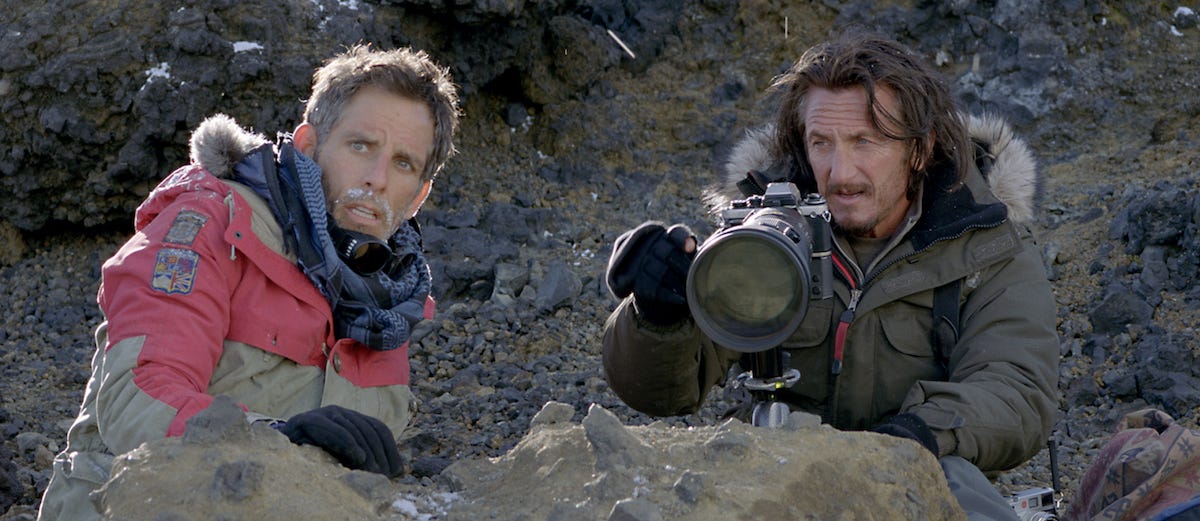
Ah, living life to the fullest, right? Seems to be the lesson the movie featuring Ben Stiller and Sean Penn wants to give us. Featuring Jose González’s superb song Stay Alive” (play it while reading this), it really does a great job of showing you how life should be a “great adventure,” inspiring you to “get out there and live your life, and invite that girl out.”
But there’s a problem, and it is that Thurber never said or wrote the quote above; it was invented for the Hollywood movie. The real Walter Mitty never got out of his situation.
In the short story, Walter is not a bachelor, as he is in the movie. He is already married to an annoying woman who’s constantly nagging him. The story is set with them running some errands, and while on the trip, Walter imagines himself being a few characters, all of them showing some version of courage, such as a fighter pilot or a surgeon. The guy is constantly escaping his reality. By the end of Thurber’s short story, Walter is waiting for his wife while smoking a cigarette; it begins to rain, and he imagines himself standing before a firing squad, ready to be executed.
They went out through the revolving doors that made a faintly derisive whistling sound when you pushed them. It was two blocks to the parking lot. At the drugstore on the corner she said, “Wait here for me. I forgot something. I won’t be a minute.” She was more than a minute. Walter Mitty lighted a cigarette. It began to rain, rain with sleet in it. He stood up against the wall of the drugstore, smoking. . . . He put his shoulders back and his heels together. “To hell with the handkerchief,” said Walter Mitty scornfully. He took one last drag on his cigarette and snapped it away. Then, with that faint, fleeting smile playing about his lips, he faced the firing squad; erect and motionless, proud and disdainful, Walter Mitty the Undefeated, inscrutable to the last.
As you can see, the original short story is nothing like the Hollywood movie. The final scene is particularly strong. He imagines himself being shot, which is a tell of how much he dislikes his current reality. And not only that, see how he imagines himself dying; check out the words: erect and motionless, proud and disdainful, Walter Mitty the Undefeated, inscrutable to the last. He reaches for what he doesn’t have in his real life. It shows a Mitty living a life of quiet desperation.
It frustrates me that the Hollywood lesson is that you should leave your boring life and buy a plane ticket; if you think about it, it is just a grander form of escapism. That’s not courage; that’s tourism. I am aware that travel opens up your mind and all, but what happens when the money runs out? And, like Jack Kerouac, you end up back at your mother’s kitchen table? Is there no room for courage in that situation? Is there no room for courage in daily life? Where you will spend the majority of your days?
Late in his life, in the foreword to Lanterns and Lances (1961), Thurber wrote:
“We all know that, as the old adage has it, ‘It is later than you think.’ But I also say occasionally: ‘It is lighter than you think.’ In this light let’s not look back in anger, or forward in fear, but around in awareness.”
Around in awareness. Not away. Not toward Greenland. Around.
This rings far truer to me. I will always have a problem with thinking that the solution to your problems and situation is anywhere but here.
The thing is, of course, that it is not easy to open up your eyes to your actual life sometimes. The original Mitty’s life looked nothing like the film’s. The original Mitty didn’t live in New York nor worked at Life magazine; he lived in Waterbury, Connecticut. He was as normal as can be, a representation of a man living a life of quiet desperation, cornered by life’s and society’s circumstances, rebelling in the only place he thought he could, his mind. But is this it? Is the original, normal Walter Mitty doomed to circumstance?
When people repeat the platitude that “your life is a canvas,” we tend to think that it is up to us to make life a “wonderful adventure,” as if the canvas were blank, ready to let your creativity flow, when the reality is that the canvas we’re given is anything but blank; some people get rosy Monet canvases, and others get a Francis Bacon. Thinking that you have or should have a blank one is a problem.
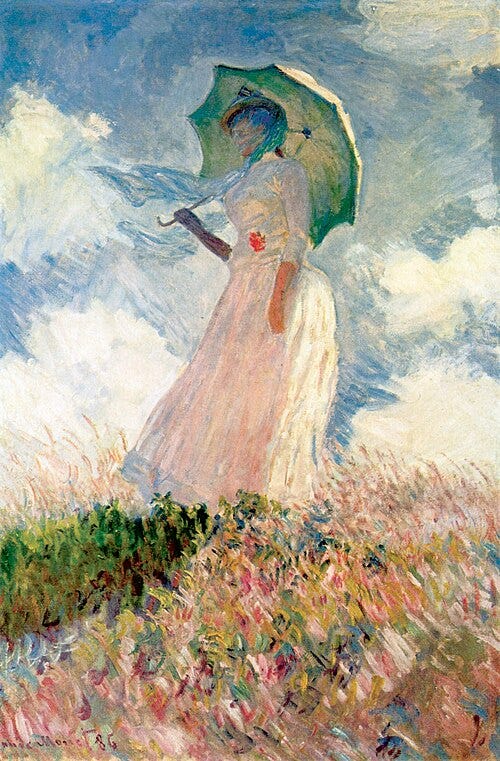
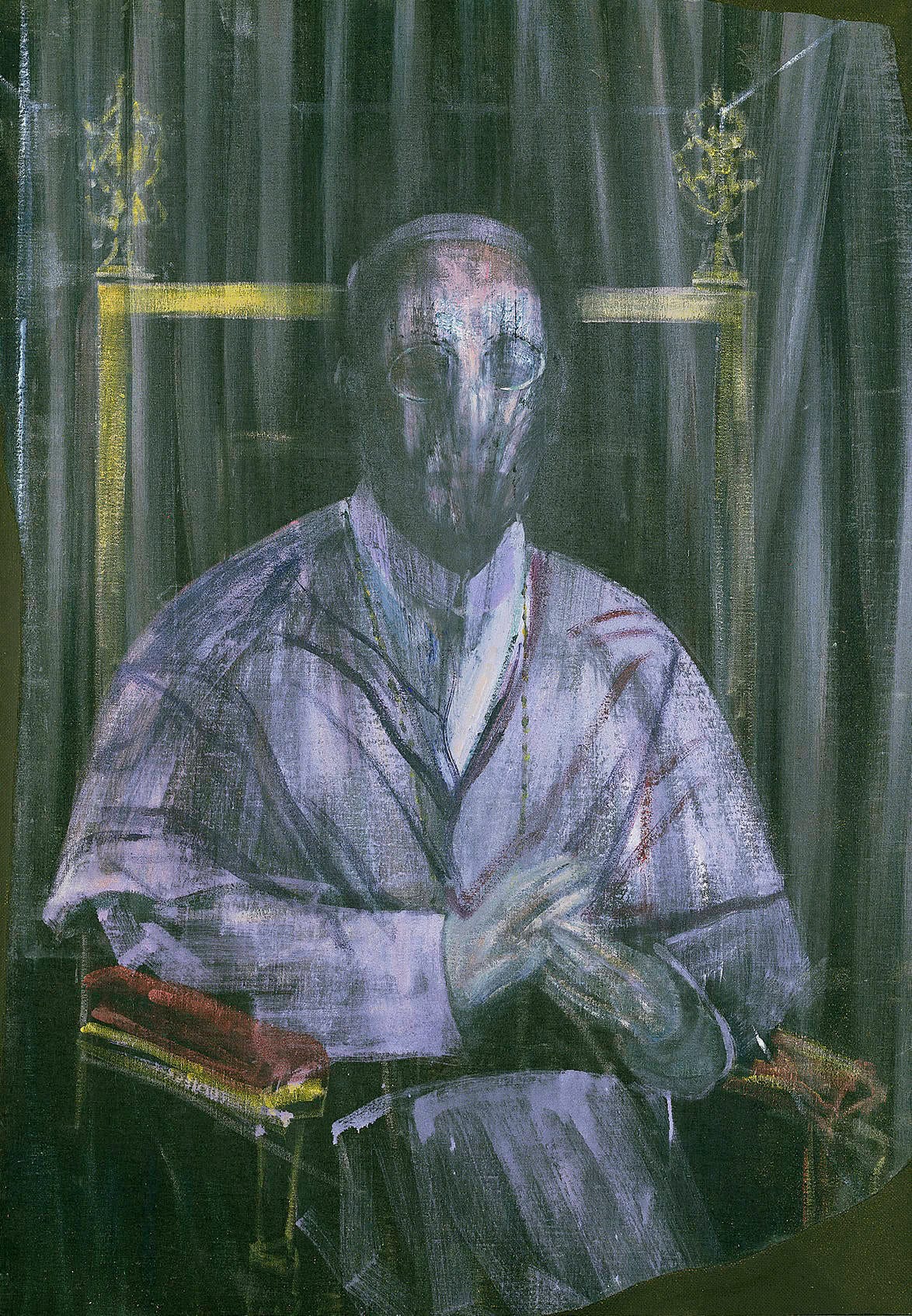
I believe the lesson here is leaning into your canvas. If your canvas didn’t put you on a grand setting for a clichéd grand life, it’s ok; the truly courageous move is to lean into your canvas, into your reality. However Baconesque it is, anything can be art with proper attention.
To choose one’s very own life is the defining and ultimately inscrutable act of courage.
Questions this essay answers
Is leaving your life for an adventure an act of courage?
it is just a grander form of escapism. That’s not courage; that’s tourism.
What if your life is not a grand adventure?
If your canvas didn’t put you on a grand setting for a clichéd grand life, it’s ok; the truly courageous move is to lean into your canvas, into your reality.
What does it mean to choose your own life?
To choose one’s very own life is the defining and ultimately inscrutable act of courage.

