Dostoevsky on Freedom, Love and the Weight of Truly Being a Man
The last article I wrote, 35 and no answers, ended with me envying Jesus Christ, from Dostoevsky's “The Grand Inquisitor” chapter in The Brothers Karamazov, for possessing knowledge I didn't have, but now I do.
It was a superb precursor to this article. I wrote 35 and no answers from a place of frustration, I wanted answers, I needed someone to tell me how to best live my life. But then I found myself thinking that I didn’t remember having understood The Grand Inquisitor very well and decided to read again, and do some research. I didn’t know what I was getting myself into, now I know why it is one of the greatest chapters of literature. Now I have my answers, but not in the form I expected.
Well, let’s begin. The Grand Inquisitor is a chapter from Dostoevsky’s The Brothers Karamazov, and it is his most famous and perhaps best novel. It narrates the story of three brothers and their disgusting father. Only two brothers matter here though, Ivan, smart and logical, and Alyosha, the goodhearted. In the chapter, Ivan tells Alyosha a story.
The Grand Inquisitor
The story is set in Spain, during the Spanish Inquisition. A terrible period where people were burned alive in what was known as an “auto de fe” (act of faith).
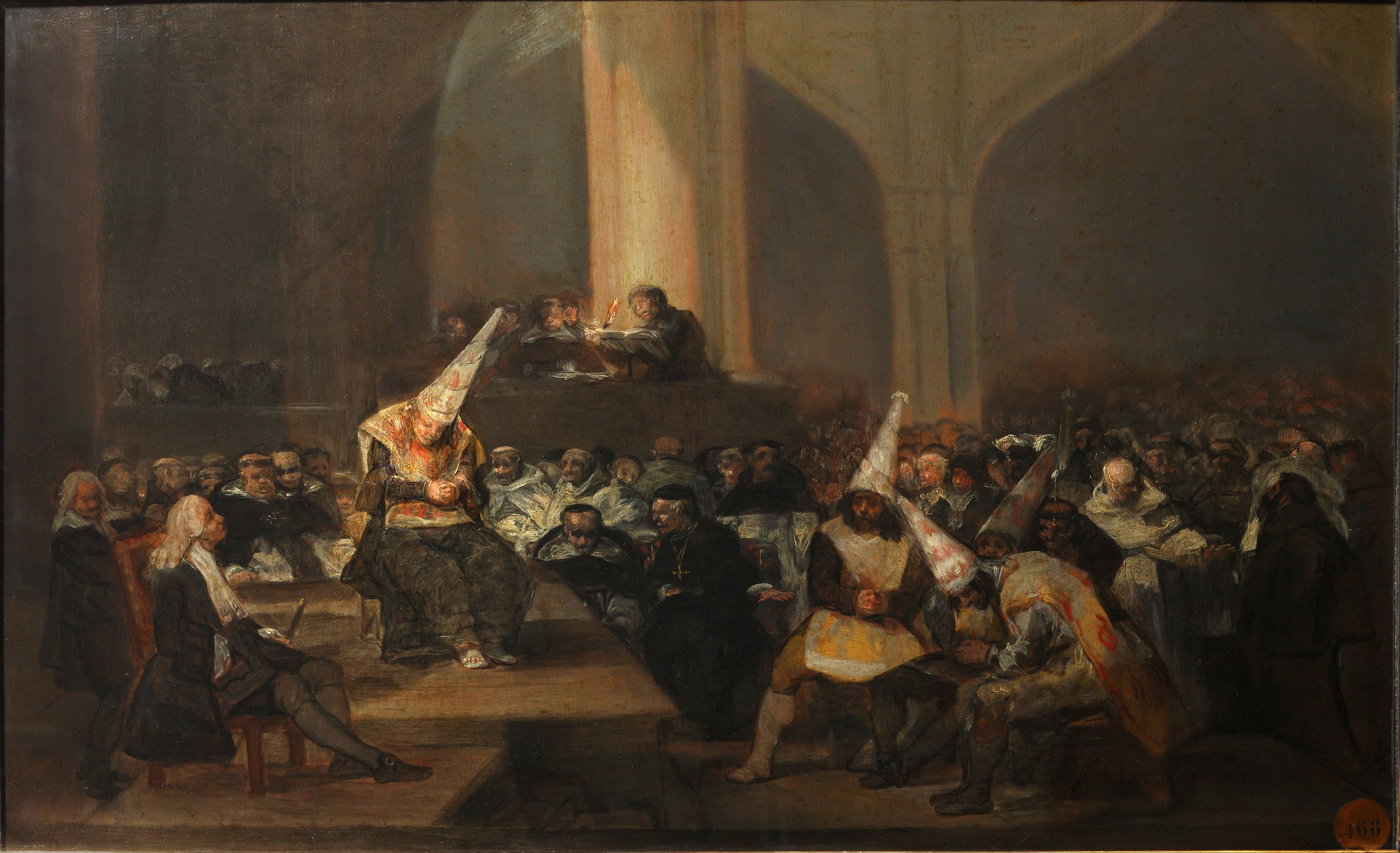
Jesus Christ arrives one day. As he walks around, people begin to recognize him, they just know it is him, he has come back. He keeps walking and he notices a dead girl in a coffin on the porch of Seville’s Cathedral, and brings her back to life. After a while, a mass naturally starts forming around him, and he is approached by the Grand Inquisitor himself. A man everyone fears completely. He orders the guards to take Jesus away and throw him in a cell. Everyone is too scared to do anything about it.
The Inquisitor then meets Jesus in the cell and asks the guards to leave them alone. Jesus is silent, he stares into the eyes of the Inquisitor. The Inquisitor orders him to remain silent and proceeds to give an emotional, angry soliloquy demanding an answer, just like me. He is angry at Jesus for having given us the gift of freedom, something so terrible to hold that only a few of us humans are strong enough to bear. He uses the story of Jesus tested in the wilderness to explain why the church had to abolish freedom. His argument is that we can't handle it, and he might be right.
Jesus Is Tested in the Wilderness
Let’s have a refresher first.
Then Jesus was led by the Spirit into the wilderness to be tempted by the devil. After fasting forty days and forty nights, he was hungry. The tempter came to him and said, “If you are the Son of God, tell these stones to become bread.”
Jesus answered, “It is written: ‘Man shall not live on bread alone, but on every word that comes from the mouth of God.’”
Then the devil took him to the holy city and had him stand on the highest point of the temple. “If you are the Son of God,” he said, “throw yourself down. For it is written:
“‘He will command his angels concerning you,
and they will lift you up in their hands,
so that you will not strike your foot against a stone.’”Jesus answered him, “It is also written: ‘Do not put the Lord your God to the test.’”
Again, the devil took him to a very high mountain and showed him all the kingdoms of the world and their splendor. “All this I will give you,” he said, “if you will bow down and worship me.”
Jesus said to him, “Away from me, Satan! For it is written: ‘Worship the Lord your God, and serve him only.’”
Then the devil left him, and angels came and attended him. — Matthew 4:1-11, NIV
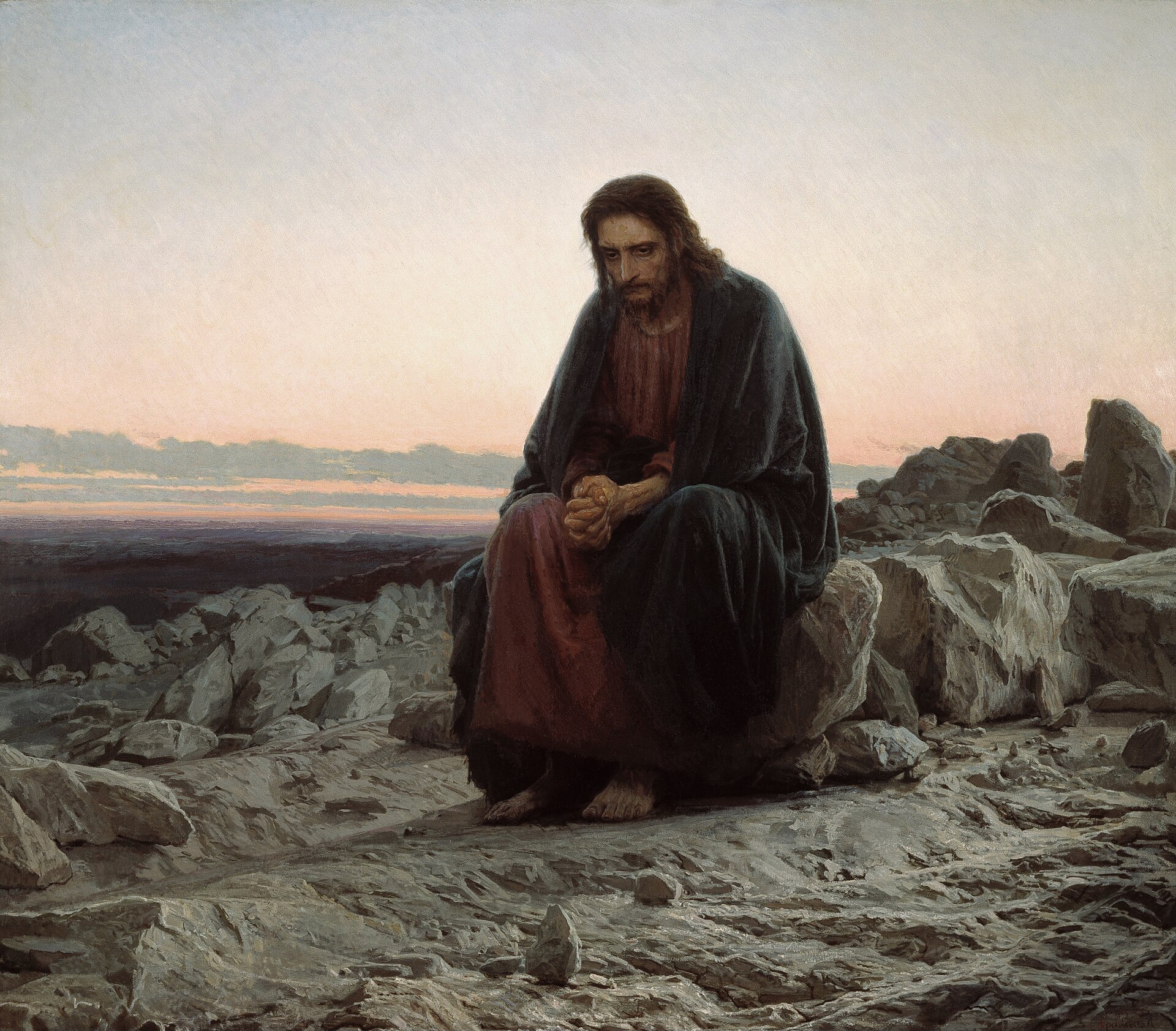
Bread, spectacle, and authority. Three temptations from the devil, three refusals from Jesus, three arguments the Inquisitor uses to explain why the church took our freedom from us, out of love.
Bread
It is important to remember that Jesus was starving, I think it is understated. After 40 days, and 40 nights of no food, he was very ready to have some bread, and yet, he answered that man shall not live by bread alone. It is implied that there is something higher than bread. He could have converted the stones to bread, yes, but if he had done so, he would have declared that hunger was more important than the freedom to choose.
What’s paramount here is the “choice”. If Jesus had chosen to turn the stones into bread, the master would have been bread. He is paying the terrible cost of hunger in the name of choosing, his refusal is the lesson. It shows that God will not coerce you to follow him with bread, or cars and houses for that matter, you’re free to do or not do so, even when you’re dying of hunger, you still need to make the decision yourself.
Can you imagine? Wouldn’t it be easier for God to feed us first, so that our decisions didn’t need to be made under such terrible conditions?
But this is the whole point! It wouldn’t be freedom if there weren’t terrible costs involved in the equation. This is why it is so hard to be truly free, there’s no way around the costs. We just want to be given the bread, the devil knows it. Who can be so morally towering that he refuses the bread in the desert?
Think about it, what would you do if you lost your house? Your income? For most of us, this would be devastating. And what this shows is that our master is not ourselves and our will of steel to “take life as it comes”, but the incessant concern of always being “properly fed”. And it is not only material sustenance either. We need meaning just as badly, and it is very hard for men to bake their own bread.
The Grand Inquisitor’s argument is that yes, there will be some strong ones out there, Catos, Diogenes, and so on, but they can be counted on one hand. The weak, the feeble, the pitiful, that is the norm, and they need direction, to be fed and told what to do, otherwise the weight of freedom will crush them.
“‘Decide yourself who was right: you or the one who questioned you then? Recall the first question; its meaning, though not literally, was this: “You want to go into the world, and you are going empty-handed, with some promise of freedom, which they in their simplicity and innate lawlessness cannot even comprehend, which they dread and fear—for nothing has ever been more insufferable for man and for human society than freedom! But do you see these stones in this bare, scorching desert? Turn them into bread and mankind will run after you like sheep, grateful and obedient, though eternally trembling lest you withdraw your hand and your loaves cease for them.”
And follows:
Oh, never, never will they feed themselves without us! No science will give them bread as long as they remain free, but in the end they will lay their freedom at our feet and say to us: “Better that you enslave us, but feed us.” They will finally understand that freedom and earthly bread in plenty for everyone are inconceivable together, for never, never will they be able to share among themselves. — The Brothers Karamazov — Dostoevsky
The Inquisitor doesn't stop at taking freedom. He tells Jesus that the church will do all of this in his name, using his own image to justify the control. The people will believe God himself demands their obedience, when in fact it is the church, following the devil's methods, that demands it.
What is most devastating is that the Inquisitor is not evil. He is doing this out of love and arriving at the rational conclusion that evil is needed to save the weak.
We shall deceive them again, for this time we shall not allow you to come to us. This deceit will constitute our suffering, for we shall have to lie. This is what that first question in the wilderness meant, and this is what you rejected in the name of freedom, which you placed above everything. — The Brothers Karamazov — Dostoevsky
Spectacle
Then the devil took him to the holy city and had him stand on the highest point of the temple. “If you are the Son of God,” he said, “throw yourself down. For it is written:
“‘He will command his angels concerning you,
and they will lift you up in their hands,
so that you will not strike your foot against a stone.’”Jesus answered him, “It is also written: ‘Do not put the Lord your God to the test.’” — Matthew 4:1-11, NIV
The second temptation is the same as the first wearing a different mask. If Jesus had thrown himself from the temple and the angels had saved him, the proof of God would have been undeniable. You would have no choice but to believe, not out of freedom, but out of fear and amazement.
Now, you might ask, didn't Jesus perform miracles elsewhere? He did. But those were acts of compassion, you know, healing the sick, raising the dead girl. In the desert, the devil is asking for something different. He is asking Jesus to prove himself. And proof would destroy the freedom to choose faith.
Now, I need to confess something at this point. I am not really sure that freedom even exists.
A couple of years ago, I read Sam Harris’ book “Free Will”, I don’t remember if I even finished it, but I do remember it threw me into a dark place I still haven’t completely gotten out of. Sam’s argument is simple determinism. The idea that freedom, as we conceive it, simply doesn’t exist. Existence is just dominoes falling, one after the other, and we are not the hand that pushes them.
This was devastating for me. I found myself in a sea of questions, with no clear answers, drowning in uncertainty, it was my first encounter with determinism. The more I dug, the more I began to intuit that the freedom I believed in as a child, true agency, was not there at all. Rationally, if there’s always a cause before a cause, how can you be the cause of anything?
And at the same time, it certainly doesn’t feel that way, I still feel I am the one who’s driving.
Here I am, with the irreducible experience of freedom, and existence asking me, almost mockingly, to make choices, when I am almost sure I am not making them myself! Hell of a situation we find ourselves in, my friends.
I had to mention this because, if freedom is so important, and I am not sure it even exists, how can I find sense in this freedom that is so important to Jesus and the Inquisitor?
The Grand Inquisitor:
But, I repeat, are there many like you? And, indeed, could you possibly have assumed, even for a moment, that mankind, too, would be strong enough for such a temptation? Is that how human nature was created—to reject the miracle, and in those terrible moments of life, the moments of the most terrible, essential, and tormenting questions of the soul, to remain only with the free decision of the heart? — The Brothers Karamazov — Dostoevsky

This question, as old as philosophy, of whether free will exists or not became my tormenting question of the soul.
Jesus offers no answers, and remains silent.
How to live freely, if we’re not even sure freedom exists?
Should we all become philosophers and scientists and go and search for it, and only, once we find undeniable. proof by quantum entanglement of multiple realities, or whatever, give ourselves permission to live? Why not live now? The experience of freedom remains, as questionable as it might be, it remains.
Even if we get to the scientific conclusion of metaphysical freedom, I repeat, the burden of our experience of reality with our forceful “choosing” remains.
This need of proof, to start living, is just you begging Jesus to throw himself and be caught by the Angels to give yourself permission, out of the coercion of miracle, to start living.
You did not come down from the cross when they shouted to you, mocking and reviling you: “Come down from the cross and we will believe that it is you.” You did not come down because, again, you did not want to enslave man by a miracle and thirsted for faith that is free, not miraculous.
You thirsted for love that is free, and not for the servile raptures of a slave before a power that has left him permanently terrified. — The Brothers Karamazov — Dostoevsky
Third argument, Authority
Again, the devil took him to a very high mountain and showed him all the kingdoms of the world and their splendor. “All this I will give you,” he said, “if you will bow down and worship me.”
Jesus said to him, “Away from me, Satan! For it is written: ‘Worship the Lord your God, and serve him only.’” — The Brothers Karamazov — Dostoevsky
Lastly, Jesus is tempted to take the earth’s kingdoms, to take Rome. Who wouldn’t submit to the emperor? By far the easiest power grab of all, but the devil is refused again. The Inquisitor, on the other hand:
Listen, then: we are not with you, but with him, that is our secret! For a long time now—eight centuries already—we have not been with you, but with him. Exactly eight centuries ago we took from him what you so indignantly rejected, that last gift he offered you when he showed you all the kingdoms of the earth: we took Rome and the sword of Caesar from him, and proclaimed ourselves sole rulers of the earth, the only rulers, though we have not yet succeeded in bringing our cause to its full conclusion.
He continues:
Why did you reject that last gift? Had you accepted that third counsel of the mighty spirit, you would have furnished all that man seeks on earth, that is: someone to bow down to, someone to take over his conscience, and a means for uniting everyone at last into a common, concordant, and incontestable anthill—for the need for universal union is the third and last torment of men.
And it is then that the beast will come crawling to us and lick our feet and spatter them with tears of blood from its eyes. And we shall sit upon the beast and raise the cup, and on it will be written: “Mystery!” But then, and then only, will the kingdom of peace and happiness come for mankind.Know that I am not afraid of you. Know that I, too, was in the wilderness, and I, too, ate locusts and roots; that I, too, blessed freedom, with which you have blessed mankind, and I, too, was preparing to enter the number of your chosen ones, the number of the strong and mighty, with a thirst “that the number be complete.” But I awoke and did not want to serve madness. — The Brothers Karamazov — Dostoevsky
It is easy to believe that the Inquisitor is acting out of a need of power, that power is his goal and motivation, but what is so interesting about the Grand Inquisitor is that his true motivation is love for mankind. It’s just that he, in his heart, does not believe in the power of man to be free. He looks around, and all he sees is meek and pitiable men, who will destroy each other lest someone intervene. Which is the reason why he takes on the devil’s project, and through it, aims to achieve a kingdom of peace.
The world is upside down with Dostoevsky indeed.
When the Inquisitor is done talking, Ivan tells Alyosha:
“I was going to end it like this: when the Inquisitor fell silent, he waited some time for his prisoner to reply. His silence weighed on him. He had seen how the captive listened to him all the while intently and calmly, looking him straight in the eye, and apparently not wishing to contradict anything. The old man would have liked him to say something, even something bitter, terrible. But suddenly he approaches the old man in silence and gently kisses him on his bloodless, ninety-year-old lips. That is the whole answer. The old man shudders. Something stirs at the corners of his mouth; he walks to the door, opens it, and says to him: ‘Go and do not come again ... do not come at all ... never, never!’ And he lets him out into the ‘dark squares of the city.’ The prisoner goes away.” “And the old man?” “The kiss burns in his heart, but the old man holds to his former idea.” — The Brothers Karamazov — Dostoevsky
A simple kiss is Jesus’ answer. The Inquisitor would’ve liked for Jesus to punish him, to “say something terrible”, to tell him why he is wrong. The Inquisitor desired Jesus to talk him out of his madness, but this would simply not do, because if Jesus had talked, he would have declared that he did not believe in the primacy of freedom he preaches. He left the Inquisitor to carry on his terrible project, freely.
With the kiss, Jesus’ project, remains untouched.
And why is freedom so important?
Love
I am sure you noticed the Inquisitor mentioning doing everything he’s doing out of love. Well, it is interesting that the most important thing for Jesus is love as well.
Their “loves” come from very different places though. The Inquisitor’s love is the love of a parent who will not let the kid take his own decisions, even when the kid is 40. It is the terrible mother.
Jesus, on the other hand, believes that for true love to happen, you have to be free. Love can only come from a place of completion, and uncoerced. You cannot gamble, coerce, or manipulate love.
You thirsted for love that is free, and not for the servile raptures of a slave before a power that has left him permanently terrified. — The Brothers Karamazov — Dostoevsky
Jesus knows this, and it is so important for him for humanity to be able to love freely, that he decides to die, in the most intense pain, and abandonment, so you can choose for yourself. Our freedom is the true weight of the significance of the sacrifice.
I know I am sounding like a Christian, trying to convert you, but trust me I am not. It is simply that I had never in life understood what this all meant, and it hits hard once you do.
Yes, you’re free, but the weight of freedom, as much as it is liberating, comes with an immeasurable cost. It is a freedom on earth, not in heaven, and the earth is full of crosses to bear. You can only be truly free if you carry your crosses, with dignity, and make your choices either way.
Jesus’ silence is his answer to his belief in humanity’s greatness. Not children, but men.
I suspect this is why the Buddha, when asked about the ultimate answer, remained famously silent as well. Because the decision of freedom just can’t be put into words. It is deeply personal. It is a decision to choose your attitude in life, to think about what you are free TO do and TO be, not what you are free FROM. It is so devastatingly lonely and personal that no amount of anything can get you there but yourself. Discussing this for a thousand years will get you to the same wall, to the same kiss.

